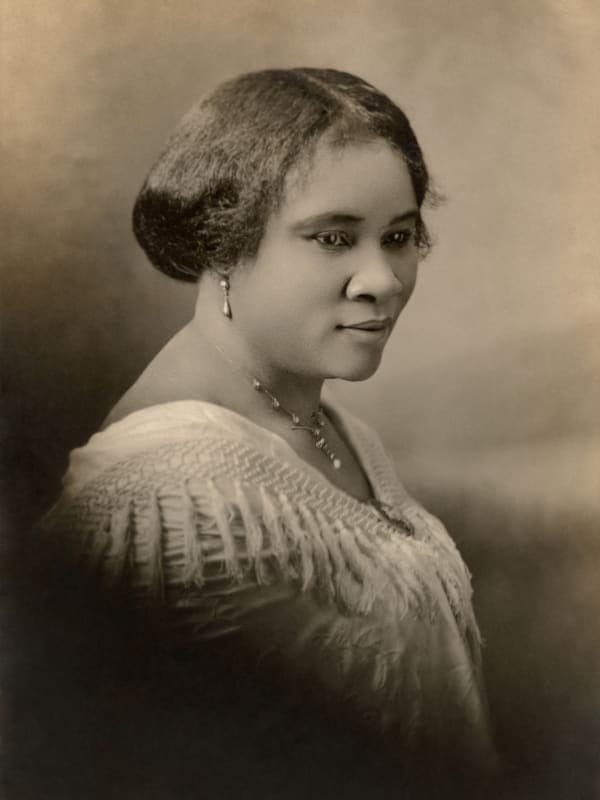
On the third and final day of the 1912 National Negro Business League convention in Chicago, Booker T. Washington had still not called on Madam C.J. Walker to speak.1 Three male cosmetics entrepreneurs had been given the floor; she had not.2 So Walker stood up from the audience during a session of the National Bankers Association, stepped forward, and spoke anyway. "Surely you are not going to shut the door in my face," she said to Washington directly. "I feel that I am in a business that is a credit to the womanhood of our race. I have built my own factory on my own ground."3 Washington showed no reaction. The following year, he invited her as a keynote speaker.1
Early Life
Sarah Breedlove was born on December 23, 1867, in Delta, Louisiana — the first child in her family born free after the Emancipation Proclamation.4 Orphaned at seven, she moved to Vicksburg with her older sister and worked in cotton fields and as a domestic servant. She married at fourteen, was widowed at twenty, and moved to St. Louis with a two-year-old daughter, where she spent the next eighteen years taking in laundry, earning barely more than a dollar a day.2 In St. Louis, four of her brothers worked as barbers, and through them she learned the rudiments of scalp and hair care. Around 1904, after she began losing her own hair, she became a sales agent for Annie Turnbo Malone, a Black entrepreneur who manufactured hair-care preparations.5 Working for Malone taught Breedlove both the chemistry of the products and how to sell directly to Black women door to door.
Career
In July 1905, Breedlove moved to Denver, where she continued selling Malone's products while experimenting in her own kitchen. She later described starting the enterprise with $1.25.6 Within months she had developed her own formula, married newspaper salesman Charles Joseph Walker, and renamed herself Madam C.J. Walker5 — a title that put her products on equal footing with the French-branded beauty lines that signaled sophistication. Her husband helped design advertisements placed in Black newspapers nationwide; she traveled the South and Southeast giving demonstrations of the "Walker Method" — a sequence of pomade, heated comb, and brushing — and accepting mail orders7 from customers who could not buy locally. By 1908 she had opened a factory and beauty school in Pittsburgh; in 1910 she moved the headquarters to Indianapolis and incorporated the Madam C.J. Walker Manufacturing Company of Indiana.8 By August of that year she had 950 sales agents.8 The formula for scaling was systematic: Walker trained agents in a standardized regimen, organized them into local clubs, rewarded the top sellers at annual conventions, and — in a move that would define the business's reach — awarded cash prizes to clubs that excelled at philanthropy in their communities. By 1917 the company reported it had trained nearly 20,000 women as sales agents.5
The same year Walker also appeared at the White House. After a white mob killed more than three dozen Black residents in East St. Louis in July 1917, Walker joined a delegation of Harlem leaders led by NAACP field secretary James Weldon Johnson to petition President Woodrow Wilson for federal anti-lynching legislation.9 Wilson refused to meet with them. A few weeks earlier, Walker had marched with more than 8,000 people in the NAACP's Silent Protest Parade down Fifth Avenue.5 At a Carnegie Hall mass meeting in May 1919, weeks before her death, she pledged $5,000 to the NAACP's anti-lynching fund — the largest gift the organization had ever received.9
Legacy
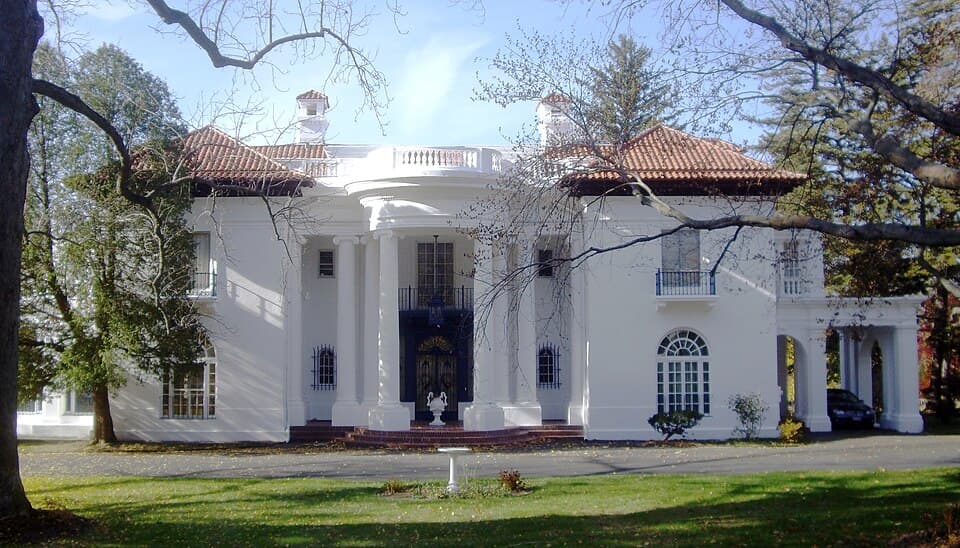
Walker died on May 25, 1919, at Villa Lewaro, her estate in Irvington-on-Hudson, of complications from hypertension.4 She was fifty-one. Before she died she revised her will, bequeathing two-thirds of future net profits to charity and educational institutions.6 The New York Times ran its obituary under the headline "Wealthiest Negress Dead."6 Her Indianapolis headquarters, the Walker Building — theater, ballroom, pharmacy, and offices combined — was completed in 1927 by her daughter A'Lelia, eight years after Walker's death, exactly as planned.4